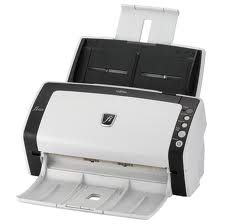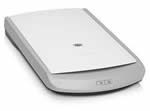
Addmen OMR solutions do not require special OMR machines. Instead, scanning is done using regular image scanners, and the Optical Mark Reader (OMR) software processes scanned images for accurate data capture.
This approach enables educational institutions, testing organizations, and businesses to process large volumes of OMR sheets efficiently and cost-effectively.
Scanning can be performed using flatbed scanners or ADF (Automatic Document Feeder) scanners.
Scanned images are imported into Addmen OMR software for automatic evaluation and data extraction.
OMR software works independently of the scanner; sheets can be scanned on one PC and processed on another.
Both single and batch sheet scanning is supported, making it flexible and scalable for any organization.
The following popular scanners are commonly used in India with Addmen OMR software:
| Scanner Model | Scan Speed | Approx Price (INR) | Notes |
| HP ScanJet Pro 3500 f1 | ~25 ppm / 50 ipm | ~49,900 | Flatbed + ADF; robust daily use |
| Brother ADS-3100 | ~40 ppm / 60 ipm | ~28,000 | High-speed batch scanning |
| Fujitsu SP-1120N | ~20 ppm / 40 ipm | ~24,500 | Duplex scanning and reliable feeder |
| Epson DS-1630 | ~25 ppm simplex | ~22,300 | Flatbed + ADF; balanced choice |
| Epson DS-530II | ~35 ppm / 70 ipm | ~32,000 | Duplex ADF and good throughput |
| HP ScanJet Pro N4600 fnw1 | ~40 ppm / 80 ipm | ~52,990 | Wireless + versatile scanning |
| HP ScanJet Enterprise Flow N6600 | ~50 ppm / 100 ipm | ~68,800 | Enterprise speed for heavy workloads |
Note: ADF speeds indicate pages per minute (ppm) for automatic feeding. Duplex scanning allows double-sided OMR sheets. Prices are approximate retail in India (2025).
There are two main approaches to scanning OMR sheets:
Uses regular scanners (ADF or flatbed).
Scanned images are processed by Addmen OMR software for accurate results.
Eliminates the need for expensive proprietary OMR machines.
Flexible, cost-effective, and scalable for small, medium, or large organizations.
Requires specialized OMR machines with built-in scanning hardware.
High cost and limited availability, especially outside major cities.
Dependent on special pre-printed OMR sheets.
Less flexible for decentralized or multi-location testing.
Cost-effective: No need for expensive OMR hardware; standard scanners are sufficient.
Flexible: Supports ADF or flatbed scanners, single or batch scanning.
Scalable: Works for small classes or large-scale examinations.
Integrated with OMR Software: Supports OCR for printed numbers and ICR for handwritten text.
Quick Deployment: Minimal setup, can scan locally or remotely, process images on any PC.
Addmen’s OMR Scanner solutions focus on software-driven processing rather than costly proprietary hardware. Using standard ADF or flatbed scanners, organizations can efficiently capture and process OMR sheets, achieving high accuracy, fast throughput, and flexibility, making it the ideal choice for modern Optical Mark Reader data capture.