- Digital Marking System for CBSE
- +91 9229113533
- +91 9229113566
- info@addmengroup.com
- Send Query
- Available as OEM on GeM

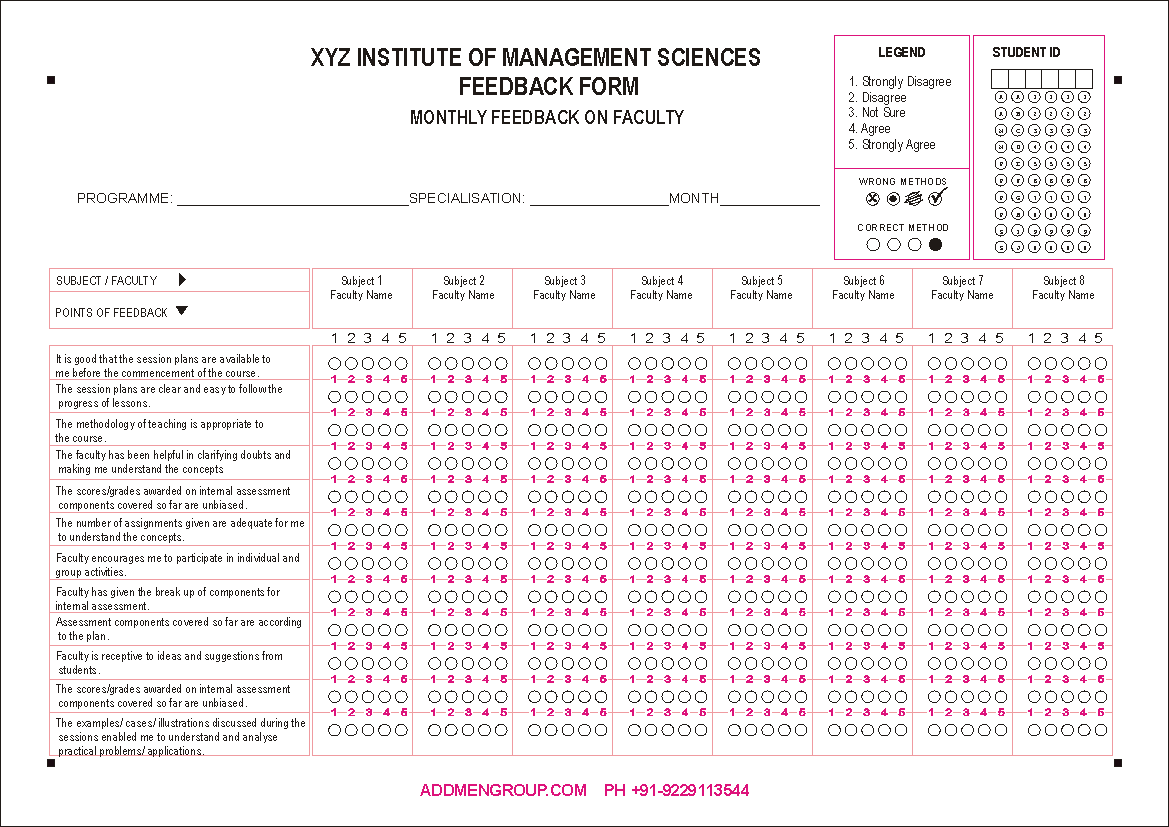
A student questionnaire is a structured set of questions designed to collect information directly from students about their experiences, opinions, attitudes, and needs related to school, college, courses, or campus life. It helps educators and administrators understand student perspectives to improve teaching effectiveness, course relevance, classroom environment, and learning resources. Student questionnaires can be used for feedback, academic research, programme evaluation, and classroom planning.
Collecting feedback from students offers several benefits:
Understand student satisfaction with academic and administrative services.
Improve teaching methods and course delivery.
Identify student preferences and learning styles.
Measure perceptions of safety, support, and engagement.
Enable data-driven decisions for classroom, curriculum, and facility improvements.
Surveys can be administered periodically — for example at the start or end of a term — to track changes over time and to benchmark progress.
Student questionnaires are most effective when used in situations such as:
End of term or semester feedback to assess course satisfaction.
Before curriculum planning to understand student needs and interests.
After events, workshops, or new initiatives to collect student impressions.
Annual institutional reviews to guide strategic planning.
They can be distributed in printed format, through online survey platforms, or via school portals to gather responses efficiently.
An effective student survey typically includes sections such as:
Collect basic information to help group and compare responses:
Age
Grade or year of study
Major or subject area
This helps identify trends across different student segments.
Questions in this section assess how students feel about their academic environment:
How clearly is the course content explained?
How satisfied are you with homework and assignment feedback?
Do you feel the curriculum meets your learning needs?
This section can include:
How effective are instructor explanations?
Are classroom activities engaging and useful?
Do you feel comfortable asking questions in class?
These questions help educators understand and improve teaching practices.
Questions can focus on facilities, support services, and atmosphere:
How satisfied are you with lab and library resources?
Is institutional support accessible when needed?
Do you feel safe and respected on campus?
Including open questions encourages students to share detailed thoughts:
What did you like most about the course?
What can be improved to enhance student experience?
Open responses often reveal insights not captured in fixed‑choice questions.
Below are example questions educators commonly use in student questionnaires:
How would you rate your overall satisfaction with this course?
Which learning method do you prefer (lecture, group discussion, practical)?
How helpful was the instructor in addressing your questions?
Do you feel your ideas and opinions are valued in class?
What suggestions do you have to improve the learning experience?
These types of questions can be adapted to school, college, or university contexts.
To ensure successful survey results:
Use clear and simple language that students easily understand.
Mix rating scale and open-ended questions for deeper insights.
Keep surveys brief and focused to increase response rates.
Pilot the questionnaire on a small group first to refine wording.
A well-designed questionnaire leads to higher completion rates and more reliable feedback.
Once responses are collected:
Analyze trends across question categories.
Identify areas of strength and improvement.
Share findings with stakeholders such as teachers, school boards, or parents.
Plan interventions based on data (e.g., refine curriculum or enhance student support).
Used effectively, student survey data can inform meaningful educational changes and improve overall academic outcomes.
A student questionnaire is a practical tool for understanding student experiences, shaping academic improvements, and supporting data‑driven decision-making in educational settings. By designing clear, relevant questions and properly analysing responses, schools and colleges can improve instructional quality and enhance student satisfaction.